


Organizer: Rajagiri College of Social Sciences (Autonomous), Kerala & Rajagiri Business School, In Association with Kerala State Higher Education Council
✔️ Philosophical foundations of qualitative research
✔️ Research design & data collection strategies
✔️ Qualitative data analysis techniques
✔️ Coding & interpretation
✔️ Ethics, trustworthiness & reflexivity
✔️ Qualitative research report writing
Prof. Aby K Abraham, Associate Professor, Rajagiri College of Social Sciences, Kalamassery
Dr. Ram Vikas, Independent Researcher
This five-day workshop is designed to provide participants with a strong foundation in qualitative research methodologies. Through expert sessions, hands-on activities, and discussions, participants will learn to design, conduct, analyze, and report qualitative studies in the social sciences.
Beneficiary Name: RAJAGIRI COLLEGE OF SOCIAL SCIENCES
Account Number: 10447876917
Bank: STATE BANK OF INDIA
Branch: KALAMASSERY
IFSC: SBIN0010570
Alakananda Jyothi – 8138836664
Denney M Thomas – 94472 24498
Faculty Co-ordinator: Dr. Joji Alex – 94474 59636
Veune: RCSS Campus, Rajagiri Valley P.O., Kakkanad, Ernakulam – 682039, Kerala

Organizer: Department of Arts and Science (IQAC Initiative), St. Francis College, BENGALURU, Permanently Affiliated to Dr. Manmohan Singh Bengaluru City University Accredited 'B++' Grade by NAAC I Approved by AICTE
This FDP offers a unique interdisciplinary platform integrating insights from economy, media, design, animation, and psychology, enabling participants to enhance academic practices and professional competencies.
✔️ Interdisciplinary learning approach
✔️ Practical insights & engaging expert sessions
✔️ Exposure to emerging domains and applications
Note: Certificate will be issued only upon: Minimum 80% attendance and Submission of feedback form
Mr. Sharath Kumar N, Founder & Director, Precise Creative Studios Pvt. Ltd.
Prof. Joel M Jacob, Assistant Professor Media Studies, CHRIST (Deemed to be University) Bangalore
Dr. Sandhya Ravi, Professor & Principal, Nitte school of Fashion Technology and Interior Design
Dr. Biswambhara Mishra, Former Professor & Head, Department of Economics, North-Eastern Hill University (NEHU), Shillong
Dr. H.S. Ashok, Professor, School of Arts, Humanities & Social Sciences Chanakya University Bangalore
Convenors:
Ms. Usha Lakshman – ? 9113977236
Ar. Jayanthi Y S – ? 9019322160


Organizer: Faculty Development Centre, Al Shifa College of Arts and Science, Affiliated to University of Calicut & Approved by AICTE, UGC 2(f)), Keezhattur, Perinthalmanna, Kerala
Topic: Continual Growth & Reflective Learning
By: Dr. Daison Panengaden, Assistant Professor, St. Thomas College, Thrissur
Topic: Teaching in the Age of Al: From Chalkboards to Chatbots
Dr. K. Thiyagu, Associate Professor, Central University of Karnataka
Topic: Constructive Teaching and Learning Practices
Dr. Mahamood Shihab K. M., Principal, Ansar Training College for Women
Topic: Integrating Employability Skills into Everyday Classroom Practice
Dr. Babu P. Κ., Founder Principal, Al Shifa College of Arts & Science
Topic: Engaging Classroom Strategies: From Presentation to Gamification
Ms. Saritha K., Vice Principal, Al Shifa College of Arts & Science
Topic: Rebooting Teaching for Gen-Z
Prof. (Dr.) Achuthsankar S. Nair, Former Head, Dept. of Bioinformatics. University of Kerala
Topic: Micro-Teaching
Mr. Junise V., Vice Principal, Al Shifa College of Pharmacy
Topic: Mastering Academic Writing for Research & Publication
Dr. Kamaludheen K.T., Principal Al Shifa College of Arts & Science
Registration Fee: 1500 INR (Fee includes Certificate , and Rereshment)
A/C No: 8682101209557 (Canara Bank, Perinthalmanna Alshifa Hospital Branch)
IFSC: CNRB0008682
Contact: 8301081980, 9388328232


Organizer: Indian Institute of Technology Patna, Sponsored by UGC (Ministry of Education), Government of India
Step 1 : Participants should register themselves through the MMC-UGC Portal
Step 2: After Registration, log in to portal with user id provided through Gmail.
Step 3: - Click on Dashboard then go to "Apply for others program” then Apply for “Short Term Programme/Faculty Development”.
Step 4: Please select IIT Patna (04th – 09th May 2026) as Center.
Regards
Patron: Prof. T. N. Singh (Director IIT Patna)
Convener: Dr. Sanjoy Kr. Parida
Coordinator: Dr. Saurabh Kr. Pandey
Contact:
Ravi Kumar-7009610451
Chandan Kumar-8227859126
Dr. Kalika Parsad: 9971591806
mmttc.iitp@gmail.com
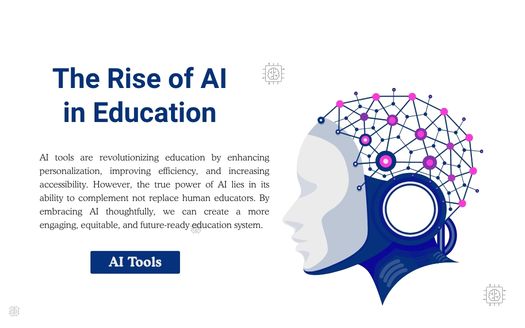
In the rapidly evolving landscape of education, Artificial Intelligence (AI) tools have emerged as powerful allies, revolutionizing the way students learn and educators teach. This transformative technology is not just a trend; it is a catalyst for innovation, efficiency, and personalized learning experiences. This article explores the profound importance of AI tools in education and their impact on shaping the future of learning.
One of the most significant contributions of AI in education is its ability to personalize learning experiences. Traditional one-size-fits-all approaches are no longer sufficient to meet the diverse needs of students. AI algorithms analyze individual learning patterns, adapt content delivery, and provide tailored recommendations, ensuring that each student progresses at their own pace and maximizes their potential.
AI-powered intelligent tutoring systems have redefined the role of educators by offering personalized guidance to students. These systems can identify areas where students are struggling, provide additional resources, and offer targeted feedback. This not only enhances the learning process but also allows teachers to focus on addressing specific challenges faced by individual students.
AI tools have streamlined the assessment process, automating the grading of assignments and tests. This not only saves time for educators but also provides instantaneous feedback to students, allowing them to understand their mistakes and make improvements promptly. The efficiency of AI in assessment enables educators to spend more time on teaching and mentoring.
Incorporating AI tools into the classroom enhances engagement by making learning more interactive and dynamic. Virtual reality, augmented reality, and gamification powered by AI create immersive learning experiences, capturing students' attention and fostering a deeper understanding of complex concepts.
AI enables the analysis of vast amounts of data to identify patterns and trends in student performance. Predictive analytics can help educators foresee potential challenges and intervene early to provide additional support to struggling students. This proactive approach contributes to reducing dropout rates and ensuring that every student has the opportunity to succeed.
AI tools break down geographical barriers, providing students around the world with access to high-quality education. Additionally, AI helps address learning disabilities by offering adaptive technologies that cater to diverse learning needs. This fosters inclusivity and ensures that education is accessible to a broader spectrum of learners.
Despite its advantages, integrating AI in education comes with challenges:
Educational institutions must adopt AI responsibly, ensuring ethical use and maintaining the human element in teaching.
The future classroom will likely be a hybrid environment where human intelligence and artificial intelligence work together. Emerging trends include:
AI will continue to evolve, making education more adaptive, inclusive, and skill-oriented.
The integration of AI tools in education is not just a technological advancement; it is a paradigm shift that empowers educators, engages students, and transforms the learning experience. As we navigate the complexities of the 21st century, embracing AI in education is not just an option; it is an imperative step towards creating a more personalized, inclusive, and effective educational system. The future of education is here, driven by the intelligence and adaptability of AI tools.

Central University of Jammu invites online application for various teaching positions under direct recruitment from the eligible Indian Citizens and Overseas Citizen of India (OCI) in the prescribed format. Minimum qualification, Experience, Reservation, Service Conditions, Emoluments, Age of Superannuation, etc. are as prescribed by the University/ UGC/ Government of India/ AICTE/NCTE and as per details available at the university website.
Number of Posts: 16
Departments: Educational Studies, English, HRM, Tourism, Marketing, Chemistry, Social Work, Physics, Economics, Mass Communication, Hindi.
Eligibility: Candidates must possess a Ph.D. from a recognized university in the relevant discipline, in addition to having qualified in NET/SET.
Selection of candidates will be based on an interview.
Mode of Application: Online.
Last Date for Application: 15-04-2026.
Copyright © 2026 Campuzine All Rights Reserved